Why Most Infrared Heaters Die (And How We Fixed It)
Let’s be honest: most infrared heaters are fragile. You put them in a tough environment, a bit of moisture creeps in, and suddenly you’ve got a dead unit. Usually, it’s because a stray water droplet or some heavy fog hits that scorching hot quartz tube. The result? Thermal shock. The glass cracks, or the electrical terminals short out. It’s a nightmare. We got tired of seeing that happen, so we built our units with an IP65 rating.
What does IP65 actually do for you?
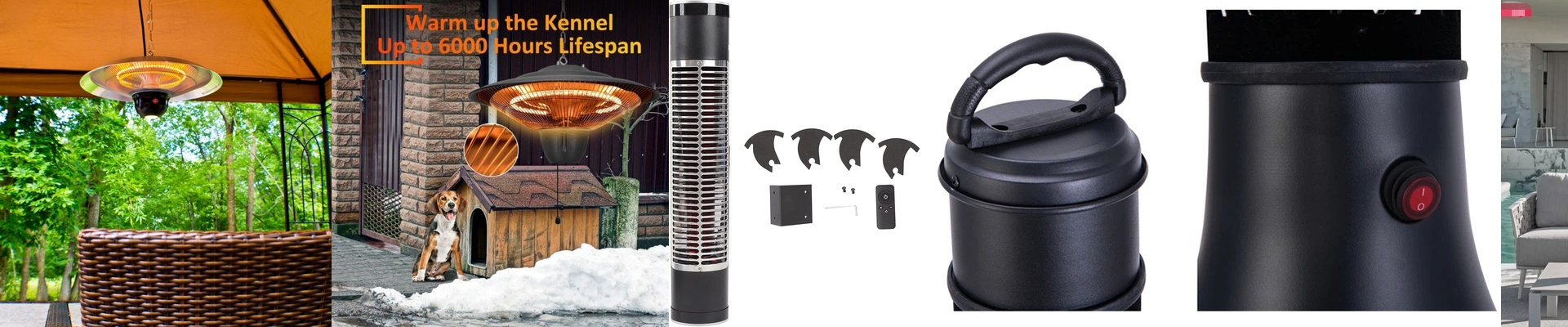
In plain English, it means the unit is dust-tight and can handle water jets without breaking a sweat. We didn’t just slap a cover on it; we used industrial-grade gaskets to seal every single place where wires enter the machine. Plus, the housings are made to repel moisture. It keeps the splashes away from the guts of the heater where they don’t belong. Then there’s the fog. That’s a different kind of problem. In those sticky, high-humidity spots, condensation loves to settle on the heating element. If that happens while the heater is cycling, the glass can snap. To stop that, we designed a housing that manages airflow specifically to keep the lens clear. It stops the dew from ever forming on the tube in the first place.
Making the hardware last
When you keep water out, you stop the slow creep of oxidation. If your connectors start to corrode, electrical resistance goes up. That leads to overheating, and eventually, the whole thing just burns out. By keeping those contacts isolated from the elements, the voltage stays steady and the heater stays happy. We also used reinforced seals. Since these heaters go through constant cycles of heating up and cooling down, cheap seals would just perish. Ours are built to handle thousands of hours of expanding and contracting without letting a single drop in.
A few things to keep in mind
Now, this kind of protection comes with a trade-off:bulk. Because of the gaskets and the heavy-duty seals, these units have a larger footprint than those flimsy open-frame models. Just make sure you double-check your mounting space before you start wiring everything up. Also, since the IP65 housing wraps the unit more tightly, it limits some of that natural airflow. You’ll want to make sure your room’s ventilation is up to scratch so the outer casing doesn’t get too hot. It’s a bit more gear to manage, but it’s the only way to go for wash-down areas or humid plants. It’s the difference between a heater that lasts for years and one that dies in three weeks.