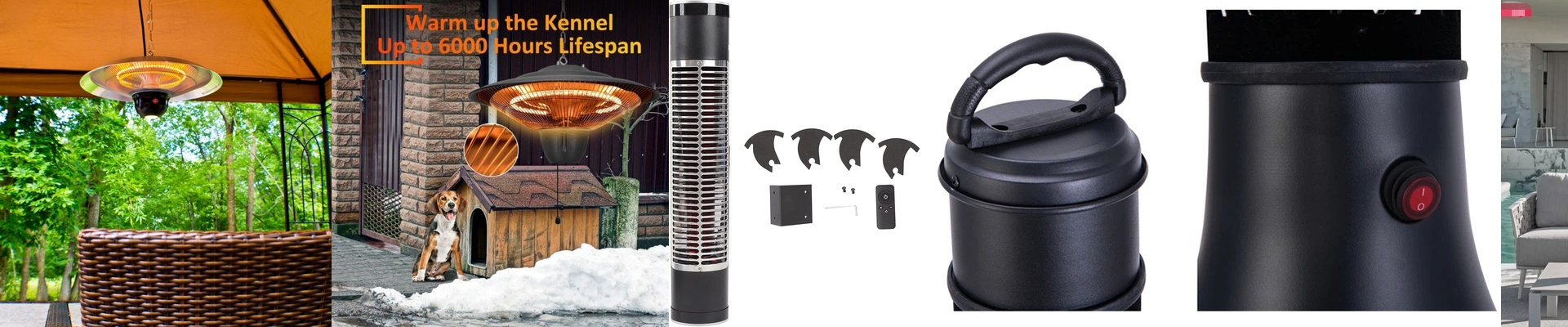

Why We Build Our Infrared Heaters to be Taken Apart
Let’s be honest: bathrooms are brutal on electronics. Between the steam, the humidity, and the constant temperature swings, things eventually break. It’s just physics. Specifically, those heating elements have a lifespan, and after a few years, they’re going to burn out. Most companies handle this by sealing everything in one big, permanent chunk. The heating element is hard-wired or glued in, which means when one tiny tube dies after five years, you have to rip the whole unit off the wall and throw it in the trash. That feels like a waste. So we did it differently.
The “Plug-and-Play” Approach
We decided to go with a modular setup. Instead of one giant assembly, our heating tubes live in their own independent cassettes. Think of it like changing a battery in a remote rather than buying a new TV. If a tube gives up the ghost, you just pull the module out and drop a new one in. No rewiring the chassis. No wrestling with the wall mount. Just a quick swap.
No More Fighting with Screws
We’ve all been there—trying to fix something only to find a rusted screw or some proprietary glue that refuses to budge. We hated that, so we designed these for real-world service. You disconnect the lead, slide the old module out, and slide the new one in. It takes a few minutes. If you’re managing a facility with dozens of these, that’s a huge win. You aren’t paying a technician to spend half a day replacing a single fixture.
The Trade-off
Now, there is a catch. To make this work, we need a bit more internal housing. This means the heater is slightly larger than those integrated units. But in my opinion, it’s a fair trade. You lose a tiny bit of wall space, but you gain a machine that you can actually maintain. Depending on how much heat you need, we use quartz or halogen tubes. The high-wattage ones get the room warm fast, but they’re tougher on the electrical connections. To stop things from arcing or wearing down from the heat, we used reinforced terminals. If you’re putting these in a busy commercial bathroom, this is the only way to go. Being able to swap a tube without replacing the whole fixture is the only way to keep your maintenance costs from spiraling.