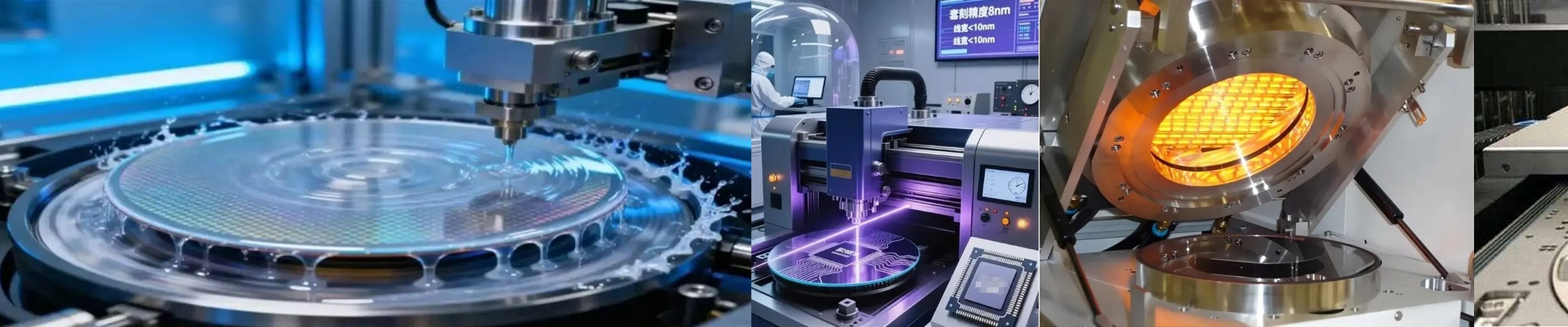
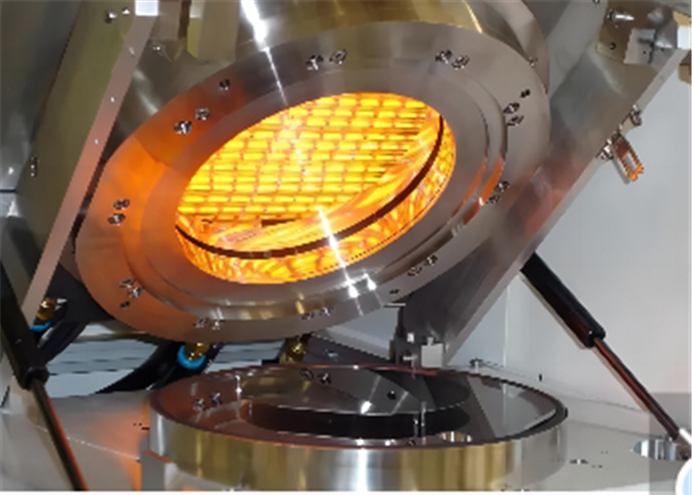
On the litho floor, photoresist bake isn’t a place to cut corners. A 1°C drift during soft bake or hard bake will move your critical dimension (CD) and throw off the sidewall profile. And when the wafer sees thermal non-uniformity, you pay for it — yield loss, rework, whole lots scrapped. We built our semiconductor laser diode heater to hold wafer-level temperature within ±0.1°C, because that’s the reality of what your process window tolerates. What matters under the hood We run NIR laser diode sources with closed-loop control, so the heat is fast, localized, and doesn’t cook hot spots into the wafer. The payoff is ±0.1°C uniformity across the active bake zone, and repeatability that holds within ±0.05°C lot-to-lot. The platform is engineered to live in cleanrooms from Class 1 to Class 100, with materials and surface finishes chosen to keep particle generation at zero through bake and cool-down. Power delivery stays stable around the clock — we’ve got units running 5,000+ hours with under 5% output drop. Why this matters in photoresist processing Temperature precision is what drives solvent removal, crosslinking, and ultimately, etch resistance. With the laser diode heater, you lock in the thermal budget at each bake step, so CD variation drops and line-edge roughness comes under control. You also get shorter bake cycles thanks to the fast thermal response, lower energy use because power tracks precisely, and fewer maintenance interruptions. It drops straight into existing tracks and coat/bake modules, so you keep your footprint while tightening process control. What you need to plan for Installation comes down to getting the optical path aligned and confirming exhaust and cooling compatibility. The heater performs best when substrate backside conditions are consistent — films, residues, or warp change thermal coupling, and you’ll want to bake that into the recipe. Plan a short commissioning run to map temperature profiles against your specific wafer stack and tune the control loop to match your line rate.