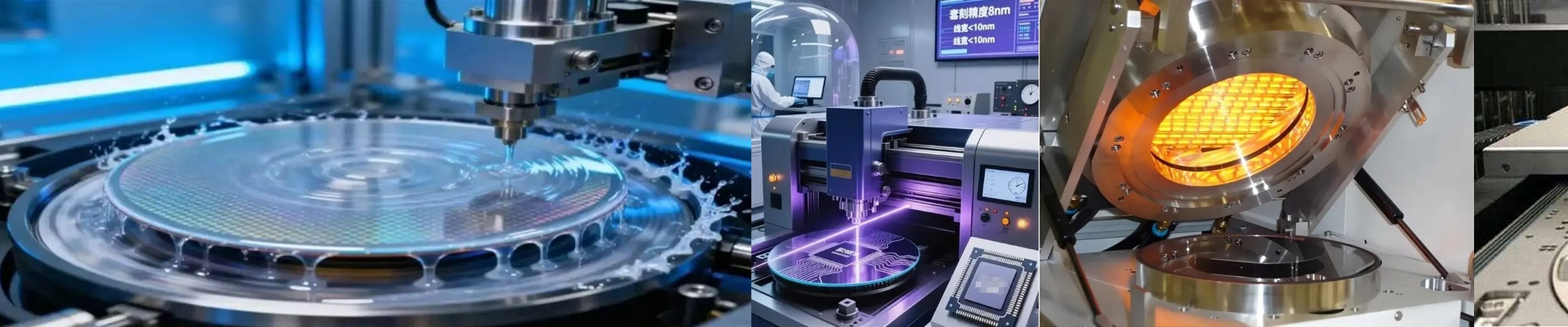
On the fab floor, you learn fast that small drifts turn into big headaches. A 0.5°C swing across the boat during oxidation can quietly chew into gate oxide integrity. In lithography, a soft bake that’s off by even a few degrees shows up as linewidth variation. Thermal repeatability isn’t a nice-to-have. It’s the process. What actually matters under the hood We run the wafer oxidation heating element on short-wave infrared (SWIR) quartz emitters—fast response, low thermal mass. The system holds ±0.1°C steady-state uniformity across the wafer carrier, and the zone control keeps setpoint steady even when the load changes. It fits Class 1–100 cleanrooms, with materials and terminations picked to keep particle generation and outgassing low. Photoresist bakes—soft bake and hard bake—stay within tight tolerance, so you protect critical dimension control and cut down on defects. Why this lands in day-to-day fab work In oxidation and diffusion, temperature consistency is what keeps film thickness on target and leakage failures off the line. In photoresist processing, precise bake control improves adhesion and reduces standing-wave effects after exposure. You end up with a tighter process window, fewer rework lots, and cycle times you can count on. Energy use stays reasonable thanks to efficient SWIR coupling and low standby losses, and the emitter life means fewer spares and less maintenance downtime. The upshot is a stable thermal budget—shift after shift, day after day. What you need to get right on install and sustain The element needs matched sockets and solid thermal anchoring to keep uniformity where it should be. Any retrofit has to line up with the existing boat geometry and clearances. SWIR gives fast response and clean heat, but the quartz components need careful handling to avoid micro-cracks, and connector torque has to follow spec—otherwise you’re chasing hot spots. Plan the install with a controlled ramp-up and soak, then temperature-map it under your exact carrier load before you release to production.