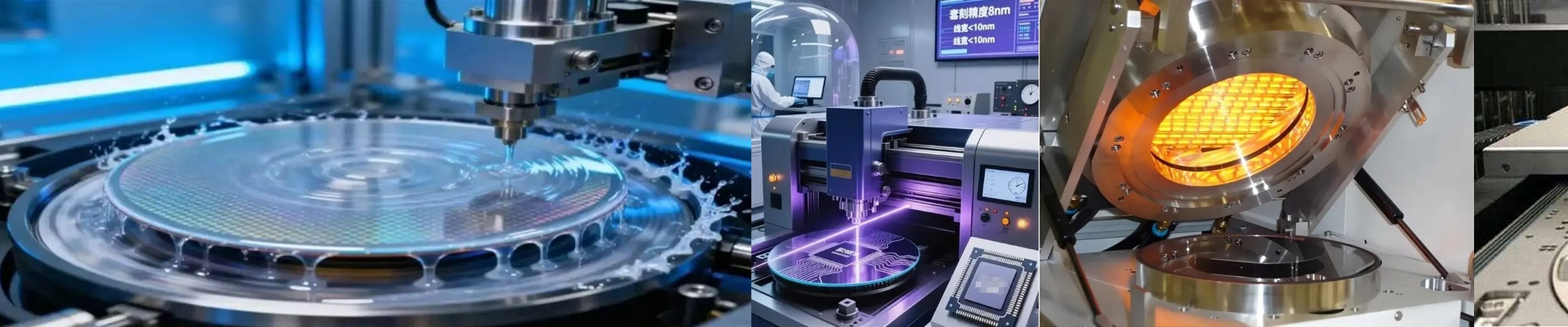
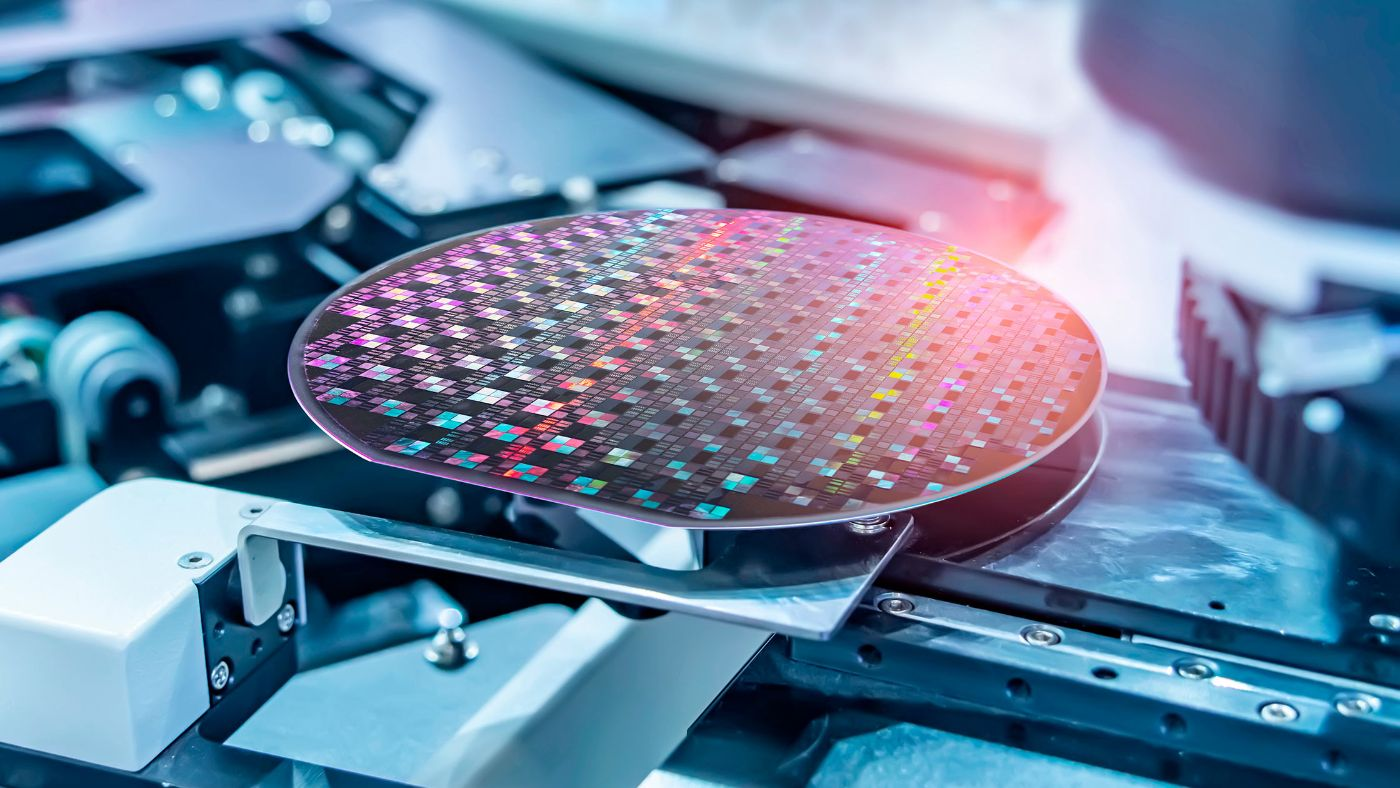
Out on the fab floor, the lithography cluster keeps moving, no pause button. The track feeds the wafer, the resist spins, the edge bead gets stripped, and the bake has to land inside a tight thermal window—every single pass. A 1°C drift during soft bake or hard bake shifts critical dimension, throws off swing curves, and eats into dose margin. When the bake module can’t hold uniformity across the wafer, you see it fast: footing, scumming, and yield loss that shows up right in the electrical test bins. Wafer IR heating isn’t about “warming” the wafer. It’s about delivering repeatable, wafer-level thermal control that fits cleanly into the lithography flow and behaves predictably under production pressure.
What actually matters
We build wafer IR heating around three measurable outcomes: temperature uniformity across the wafer, repeatability lot to lot, and zero particle generation under cleanroom constraints. The core is short-wave infrared (SWIR) halogen emitters in a quartz lamp assembly. SWIR couples heat directly into the wafer and photoresist stack with minimal reliance on conduction or convection. That gives you fast response with low overshoot—exactly what you need when the bake step has to start and stop on time to protect the resist profile. Temperature uniformity is specified at the wafer level, not the susceptor. We target ±0.1°C across the wafer plane during steady-state bake, verified with calibrated thermocouple mapping and wafer-equivalent thermal models. That tight band keeps resist flow and solvent removal consistent from center to edge, which directly tightens CD control and reduces residual film variation. Photoresist bake precision comes from holding setpoint stability within ±0.2°C during the bake dwell, with ramp rates matched to resist vendor recommendations. The controller runs a closed-loop, emissivity-aware algorithm tuned for silicon and coated wafers, so the indicated temperature tracks the actual wafer temperature, not the heater block. Repeatability is just as important as accuracy. Every bake station has to reproduce the same thermal history, lot after lot, shift after shift. We qualify the module with multi-point thermal mapping, 24-hour drift tests, and lot-to-lot variation studies. The result is straightforward: consistent wafer temperature, consistent line width, consistent defect performance. Cleanroom compatibility is non-negotiable. Lamp and reflector geometry are set up to minimize particulate shedding, and the hot zone is isolated from the wafer path. The system meets Class 1–100 integration requirements with sealed lamp ends, cleanable fixtures, and materials chosen to keep outgassing and particle counts low. Reliability is measured in uptime. The lamp assembly is engineered for 24/7 operation, with controlled filament loading and managed thermal stress. We have units running 5,000+ hours with less than 5% output drop, and the hot-swappable lamp design lets you service without pulling the entire bake module out of the track.
Why it fits the lithography reality
In lithography, the bake steps define resist behavior—before exposure and after. Soft bake controls solvent removal and film stress. Hard bake stabilizes the image before etch or implant. If heat delivery varies, the resist profile varies, and the pattern transfer window shrinks. Our wafer IR heating drops straight into track bake stations. It replaces older hot-plate approaches that can show edge roll-off, slow ramp times, and susceptor contamination. With radiative SWIR heating, the wafer temperature rises quickly and evenly, cutting the time spent in transition where temperature gradients form. The process window opens up, and sensitivity to ambient drift drops. You gain in three practical ways. Better process control. Tighter wafer-level uniformity means fewer CD and thickness excursions. Engineers can trim guardbands on temperature setpoints and still hold spec, which improves throughput without sacrificing yield. Lower operating cost. SWIR systems heat only the target—no big hot block spinning up and idling. Energy use drops compared with conventional bake modules that maintain heavy thermal mass. Lamps can be powered on demand, and the fast ramp reduces time at temperature, which also reduces thermal stress on the wafer. Fewer unplanned stops. The module is built for continuous fab operation. Lamps are hot-swappable, and the controller provides predictive maintenance data—hours remaining, output trend, and thermal drift. When a lamp hits end-of-life, you replace it during scheduled maintenance, not in the middle of a production crisis. This matters when you’re running advanced nodes with tight thermal budget and thin resist stacks. It matters when you’re qualifying a new photoresist and the bake temperature needs to be stable to 0.1°C to hit the right dissolution behavior. It matters when the line is running 24/7 and downtime is measured in lost wafer starts.
The details you need
High-precision IR heating works with most lithography tracks and bake stations, but it’s not a drop-in swap without planning. Integration comes down to mechanical envelope and thermal isolation. The lamp assembly, reflector geometry, and temperature sensor placement have to match the wafer path and existing end-effector clearances. Retrofitting an older track may need minor mechanical changes to maintain wafer handling and prevent cross-contamination from the hot zone. Lamp life is finite. Even with robust filament design and controlled drive, SWIR lamps have a predictable end-of-life. Keep hot-swap spares on hand and align preventive maintenance to the lamp replacement interval. The good news: replacement is fast and doesn’t require recalibrating the entire bake module if the lamp is matched and installed correctly. You still need process tuning. Photoresist vendors give bake temperature ranges, but the exact setpoint and ramp profile should be optimized for your film stack, solvent content, and pattern density. Use the tighter uniformity to explore a narrower window—then lock it down with control charts and lot qualifications. And cleanroom housekeeping matters. Keep lamp ends clean, make sure reflector surfaces stay free of deposits, and verify that airflow around the module isn’t creating thermal gradients. The system can hold ±0.1°C when installed the way it was intended. If the installation creates local turbulence or uneven cooling, uniformity will drift. If your lithography line is chasing tighter CDs, fewer defects, and yield that holds across shifts, the bake step is a lever you can actually control. Wafer IR heating gives you that control—with numbers you can verify in the fab and repeatability you can trust in production.